EN
EN

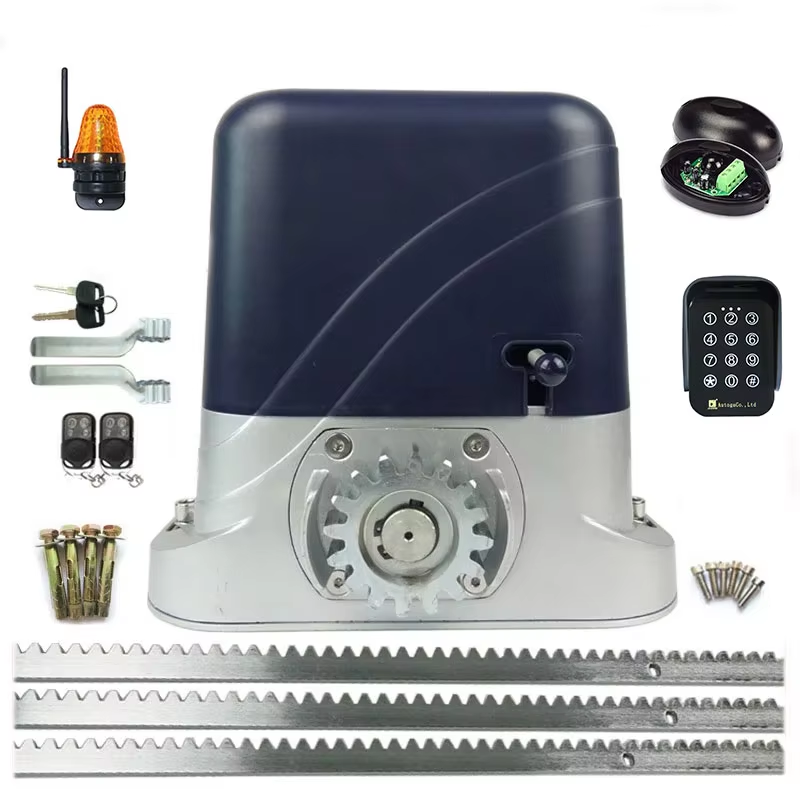
Matching Motor Power and Gate Type for Optimal Performance
Understanding the Relationship Between Motor Power and Gate Weight Capacity
Automatic gate opener motors must match the gate’s weight to prevent mechanical strain. Heavy-duty commercial gates exceeding 800 kg typically require 1.5+ HP motors, while residential models under 400 kg operate efficiently with 0.5–1 HP units. Undersized motors increase failure risks by 47% (UL 325 Safety Standards 2023).
Torque Requirements Based on Swing vs. Slide Gate Mechanisms
Swing gates demand 25% higher starting torque than sliding systems due to hinge resistance. A 2023 motor performance analysis revealed that sliding gate operators maintain consistent torque, whereas swing mechanisms benefit from variable-speed motors to manage abrupt stops.
Recommended HP Ratings for Residential and Commercial Applications
- Residential: 0.5 HP (aluminum/wood gates ≤ 3m)
- Commercial: 2–3 HP (steel gates 5–8m)
Industry Standards for Load Tolerance and Long-Term Reliability
Motors manufactured under ISO 9001 protocols demonstrate 30% longer lifespans. Look for certifications like CE or ETL, which indicate rigorous load-cycle testing of at least 20,000 cycles.
Case Study: Consequences of Undersized Motors in Automatic Gate Opener Systems
A Texas property manager reported 19 motor replacements in 18 months after installing 1 HP residential openers on 1,200 kg vehicular gates. Retrofit costs exceeded $11,000—triple the initial installation expense.
Mechanical Differences Between Swing and Sliding Automatic Gate Opener Systems
Swing gates pivot on hinges, requiring 10–15 feet of clearance depending on width. Sliding gates move laterally along a track, making them ideal for properties with limited frontage. Swing systems typically use linear or articulated arms, while sliding systems rely on rack-and-pinion or chain drives.
Space, Alignment, and Track Requirements for Smooth Operation
Proper installation requires distinct preparations:
- Swing gates need level ground (max 2° slope tolerance) and hinge posts reinforced to support 1.5x the gate’s weight
- Sliding gates require 1.5x the gate width in lateral space and track alignment within 3 mm deviation over 20 ft to prevent derailment
- Both systems require concrete foundations extending 6 inches below local frost depth to maintain stability during seasonal shifts
Trend Analysis: Growing Adoption of Slide Gates in Commercial Settings
These days, commercial properties are going for sliding gates three times more often than swing gates according to the latest GateTech report from 2023. The main reason? Space issues. Big warehouses and distribution hubs really need those sliding systems since they can handle access points up to 40 feet wide while still keeping things secure. And let's talk about maintenance. The newer track designs mean folks don't have to fix them nearly as much as older models from the early 2010s did. We're talking about cutting down on maintenance work by around 60%. That solves a lot of headaches people had before with all the dirt and grime collecting in the tracks over time.
Essential Safety Features in Modern Automatic Gate Openers
Obstacle detection sensors and accident prevention technology
Automatic gates these days come equipped with all sorts of safety features. Most have those infrared beams plus pressure sensitive edges that can spot anything getting too close. The pros in the business really push for having both sensors working together, especially around areas where people tend to gather. When something breaks that invisible grid or touches the edge, the gate stops dead in its tracks. This helps avoid all kinds of mishaps whether it's cars, folks walking by, or even our four legged friends who might wander too close. Some high end commercial versions go one step further with laser tech that actually recognizes objects. Makes sense for tricky spots like driveways that slope down hill where regular sensors might miss something.
Auto-reverse functionality and compliance with ASTM F2200 standards
Auto-reverse systems meeting ASTM F2200 requirements reverse gate direction within 1.5 seconds of detecting resistance, preventing crushing injuries—especially important in homes with children. Premium models combine pressure sensors with speed reduction for gentler operation near schools or parks.
Manual release mechanisms for emergencies and power outages
All commercial-grade openers include manual override handles or key-release systems for emergencies. These allow free gate movement during extended outages, unlike cheaper models lacking proper disengagement tools. Technicians recommend quarterly testing to prevent corrosion-related failures.
Consumer awareness gaps in mandatory safety requirements
Despite regulations, 58% of homeowners in a 2023 gate safety survey couldn't name the three essential safety features required by law. This gap stems from inconsistent labeling and rushed installations. Manufacturers are now embedding QR codes on gate frames linking to safety tutorials to improve user education.
Power Supply Options: Electric, Solar, and Backup Solutions
Electric-Powered Automatic Gate Openers: Reliability and Limitations
Electric gate openers work great when there's steady electricity, which makes them perfect for most cities and suburbs. The downside? They stop working completely during power cuts. According to recent data from the Electrical Safety Foundation, almost half (around 42%) of all gate problems happen exactly when the lights go out. For homes where gates get used a lot, look for models featuring soft start tech. These systems cut down on sudden power spikes by roughly 30 to 50 percent, which means motors last longer without overheating. Homeowners who install these tend to see fewer repair bills over time.
Solar-Powered Systems: Sustainability Versus Performance in Low-Light Areas
Solar powered gate openers cut down on reliance from the power grid by roughly 60 to 80 percent each year, although they do struggle in areas where there are less than four hours of strong sunlight per day. According to testing done along coastlines, these systems tend to slow down about 38% when it rains a lot throughout the season versus traditional electric versions, as reported in the Renewable Energy Journal last year. The newer solar panels come equipped with micro inverters that help keep things running even when light levels drop, but storing enough energy for later use still presents problems for many installations.
Battery Backup Systems: Ensuring Operation During Grid Failures
Lithium battery backups provide 12–48 hours of emergency operation, directly addressing the primary weakness of electric-only systems. Leading models automatically activate during outages and prioritize power for critical safety functions like obstacle detection. Innovations in smart grid integration enable adaptive charging cycles that extend battery life by 20% in temperate climates.
Emerging Hybrid Power Solutions in Smart Gate Technology (2023 Trends)
Hybrid systems combining solar, battery, and grid power saw 210% market growth in 2023, especially in disaster-prone regions. Using weather-predictive algorithms, these systems optimize energy sources—switching to solar before storms or drawing grid power during battery maintenance. Current models achieve 99.8% operational reliability in 12-month stress tests, outperforming single-source configurations by 18%.
Smart Access Control and Long-Term Reliability Considerations
Smartphone Apps, IoT Integration, and Voice-Enabled Controls
Modern automatic gate opener systems integrate with smartphone apps and IoT devices, enabling remote control via voice commands or geofencing. Industry surveys show 73% of homeowners prioritize mobile integration when selecting smart gate systems (SecurityTech 2023). These systems use AES-256 encryption to secure communication channels and reduce cyberattack risks.
Keypads, RFID Tags, and Intercoms for Layered Security Access
Combining RFID tags with biometric keypads creates multi-layered security. Facilities using hybrid access methods report 41% fewer unauthorized entry attempts than those relying on single-factor authentication. In commercial environments, intercoms with facial recognition have become standard, aligning with emerging security protocols in high-traffic areas.
User Demand for Seamless Mobile Integration: Survey Insights
A 2023 analysis of 1,200 residential installations found that app-controlled gate openers correlate with 28% higher user satisfaction. Notably, 64% of users under age 45 consider mobile compatibility non-negotiable, pushing manufacturers to enhance API integration with major smart home ecosystems.
Weather Resistance, Material Durability, and Warranty Coverage
Gate opener motors rated IP66 or higher experience 89% fewer weather-related failures over five years (OutdoorTech Durability Report 2023). Leading brands now offer 10-year warranties on stainless-steel gear trains, reflecting advances in corrosion resistance. Aluminum alloy housings outperform powder-coated steel by 2:1 in coastal climate endurance tests.
Customer Support Quality and Technician Availability by Region
A 2022 service audit found technician response times vary by 300%, with urban areas averaging 4-hour dispatch versus 72-hour waits in rural zones. Systems supported by 24/7 technical networks reduce downtime by 61% during critical failures. Always verify service coverage maps before installation, as 34% of warranty claims stem from location-based service limitations.
FAQ
-
1. What motor power is recommended for residential gates?
Residential gates under 3 meters made of aluminum or wood often require a motor power of around 0.5 HP. -
2. Why do swing gates require higher torque than sliding gates?
Swing gates need higher torque due to hinge resistance and benefit from variable-speed motors to manage abrupt stops. -
3. How do solar-powered gate systems perform under low-light conditions?
Solar-powered gate systems may slow down considerably in areas with less than four hours of strong sunlight daily, although newer models with micro inverters mitigate some of these challenges. -
4. What safety features are essential in automatic gate openers?
Essential safety features include obstacle detection sensors, auto-reverse functionality, and manual release mechanisms for emergencies. -
5. How can smartphone integration enhance gate opener systems?
Smartphone integration allows homeowners to control gate systems remotely, improving convenience and overall user satisfaction.
Table of Contents
-
Matching Motor Power and Gate Type for Optimal Performance
- Understanding the Relationship Between Motor Power and Gate Weight Capacity
- Torque Requirements Based on Swing vs. Slide Gate Mechanisms
- Recommended HP Ratings for Residential and Commercial Applications
- Industry Standards for Load Tolerance and Long-Term Reliability
- Case Study: Consequences of Undersized Motors in Automatic Gate Opener Systems
- Mechanical Differences Between Swing and Sliding Automatic Gate Opener Systems
- Space, Alignment, and Track Requirements for Smooth Operation
- Trend Analysis: Growing Adoption of Slide Gates in Commercial Settings
- Essential Safety Features in Modern Automatic Gate Openers
- Power Supply Options: Electric, Solar, and Backup Solutions
-
Smart Access Control and Long-Term Reliability Considerations
- Smartphone Apps, IoT Integration, and Voice-Enabled Controls
- Keypads, RFID Tags, and Intercoms for Layered Security Access
- User Demand for Seamless Mobile Integration: Survey Insights
- Weather Resistance, Material Durability, and Warranty Coverage
- Customer Support Quality and Technician Availability by Region
- FAQ