EN
EN

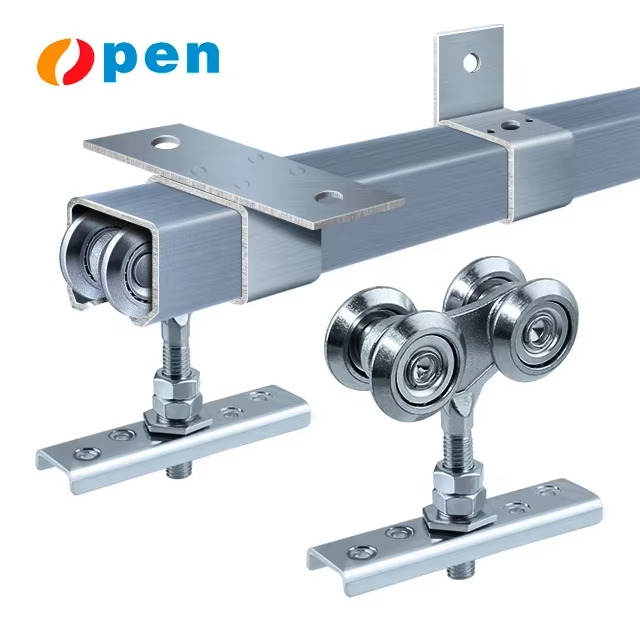
Preparing the Substrate: Soil, Drainage, and Foundation for Sliding Gate Track Stability
Evaluating Soil Load-Bearing Capacity and Slope to Prevent Track Settlement
Geotechnical testing should always come first before putting in a sliding gate track system. Many DIYers skip this step completely, which leads to problems down the road. If the soil doesn't reach at least 95% Proctor density, there will be issues with how evenly the ground settles over time. This uneven settling causes the track to shift out of alignment and creates friction problems during operation. The slope of the site matters just as much. When slopes go beyond 1%, water drains poorly across the surface and starts eating away at the soil underneath the track foundation. To get things right on clay soils, stabilization techniques like adding lime or laying down geotextile fabric work well. Laser leveling helps ensure the final grade stays within half a degree maximum inclination. Contractors who ignore these basic requirements end up fixing track systems far too often. Statistics show around one out of every four early track failures happen because someone overlooked proper soil preparation, usually resulting from either frost damage pushing up sections of track or water washing away support material from beneath it all.
Concrete Pad Specifications: Dimensions, Reinforcement, and Maximum Allowable Slope (1/8" per 10 ft)
A solid concrete base needs to handle all those gate movements without cracking or shifting. For most installations, the pad should stick out at least 12 inches past the tracks on each side and be about 8 inches thick throughout. Throw in a #4 rebar grid running every foot across the whole area for extra strength. Go with a 3,500 PSI mix when pouring since heavy gates push sideways against the structure. Keep an eye on the slope too it shouldn't drop more than 1/8 inch over 10 feet. Check this constantly while working with digital inclinometers right there on site. If water starts collecting anywhere, it'll eat away at anchor points and ruin the bond between materials. Not enough steel reinforcement means cracks will form especially bad during winter thaw periods. Once everything sets up properly, test how fast water drains off the edges. Look for drainage rates above 2 inches per hour around the entire perimeter after the concrete cures completely.
Installing the Sliding Gate Track: Anchoring, Alignment, and Parallelism
Bolt-Down vs. Embedded Anchors: Choosing the Right Method for Long-Term Track Rigidity
Anchor selection hinges on soil behavior and gate demands. Bolt-down anchors typically expansion or wedge types are ideal for well-compacted substrates and allow fine-tuning of tension during installation. Embedded anchors, cast directly into the concrete pad, deliver superior lateral resistance in expansive soils or high-wind zones. Key considerations include:
- Gate weight capacity: Embedded systems reliably support loads over 1.5 tons without creep
- Frost risk: Bolt-down anchors permit seasonal adjustment; embedded versions require footings below local frost depth
- Maintenance access: Bolt-down configurations allow ±3mm repositioning if minor settlement occurs
Precision Alignment Techniques: Laser Leveling and String-Line Verification for Consistent Track Elevation and Parallelism
Keeping elevation changes below 2mm over a 10 meter stretch requires checking things multiple times instead of trusting just one method. Start by setting up a laser level at the highest spot along where the track will go, this creates our baseline for everything else. Adjust each section of track with shims until that red laser line sits right against those metal flanges on the sides. After that, run some strong nylon strings across the track every two meters or so and check how even the space between string and rail looks. If there's more than 1.5mm difference somewhere, that usually means the whole track has twisted when put together. Field reports from actual installations show that combining these techniques cuts down on derailments by around three quarters compared to older methods.
Verifying Gate-Track Integration: Clearance, Engagement, and Movement Path Optimization
Critical Clearance Zones: Applying the 1.5x Gate Width Rule and Wheel-Track Engagement Depth Standards
Getting reliable operation out of these systems really comes down to getting those clearances right. The first thing to watch for is keeping an area free from obstacles that should be about 1.5 times wider than the gate itself all along where it moves. This extra space lets the gate swing naturally without hitting anything when the wind starts blowing it around. Then there's the wheel seating depth in the track channel. We're talking about getting at least a third of each wheel's diameter inside that channel. Why? Because if they sit too shallow, we've seen gates derail about 40% more often in strong winds. After installation, don't just grab a tape measure. Use proper laser alignment equipment instead. Tape measures miss those tiny bumps or irregularities that can mess up the gate's smooth movement over time. Taking these steps makes a big difference in how long those rollers, bearings, and track rails actually last before needing replacement.
Avoiding Common Sliding Gate Track Installation Mistakes That Compromise Stability
Top 5 Field Errors: Undersized Anchors, Unverified Subgrade Compaction, and Misaligned End Stops
Five recurring oversights undermine system longevity and safety:
- Undersized anchors, unable to resist lateral gate forces, initiate progressive track movement
- Unverified subgrade compaction, cited in nearly 60% of premature track failures (Foundation Integrity Council, 2023), permits uneven settlement
- Misaligned end stops, which create concentrated impact points damaging rollers, gearmotors, and structural welds
- Excessive track slope, violating the 1/8" per 10 ft tolerance, causing binding, wheel lift, and derailment
- Inadequate clearance zones, breaching the 1.5x gate width rule, resulting in friction, jamming, or structural interference
Collectively, these errors accelerate component wear by up to 50%. Rigorous on-site verification of compaction, anchor specs, slope, stop positioning, and clearance remains the most effective safeguard against avoidable failure.
FAQ
What is the recommended soil density for installing sliding gate tracks?
The soil should reach at least 95% Proctor density to prevent issues with track alignment and settlement.
How thick should a concrete pad be for a sliding gate track installation?
The concrete pad should be approximately 8 inches thick, with a #4 rebar grid and extend at least 12 inches past the track on each side.
What is the advantage of using embedded anchors over bolt-down anchors?
Embedded anchors provide superior lateral resistance and are ideal for expansive soils or high-wind zones, supporting gate loads over 1.5 tons.
How can I ensure the track remains aligned during installation?
Utilize laser leveling and string-line verification to keep elevation changes below 2mm and ensure consistent track parallelism.
What are common mistakes in sliding gate track installations?
These include using undersized anchors, not verifying subgrade compaction, misaligned end stops, excessive track slope, and inadequate clearance zones.
Table of Contents
- Preparing the Substrate: Soil, Drainage, and Foundation for Sliding Gate Track Stability
- Installing the Sliding Gate Track: Anchoring, Alignment, and Parallelism
- Verifying Gate-Track Integration: Clearance, Engagement, and Movement Path Optimization
- Avoiding Common Sliding Gate Track Installation Mistakes That Compromise Stability