EN
EN

Matching Sliding Gate Wheel Size to Gate Type: Residential, Commercial, and Industrial
Residential Gates: Lightweight sliding gate wheels for manual or low-cycle automated use
Most residential gates come in at less than 400 kg and usually get opened and closed about 10 times daily max. For these applications, nylon or polyurethane wheels with diameters around 40 to 50 mm work best. They keep things quiet when operated manually, run smoothly, and play nicely with standard automation setups. The housing material matters too. Lightweight aluminum versions help stop those annoying track deformations we often see with bulkier steel options. Plus, they maintain at least 25 mm of ground clearance which keeps dirt and grime from collecting underneath. Going bigger with wheel size isn't really worth it though. Larger wheels just create more drag on the tracks and wear them out faster without actually improving how well the gate functions overall.
Commercial Gates: Medium-duty sliding gate wheels balancing load, durability, and track compatibility
Most commercial gates handle weights between 400 to 1,200 kilograms and typically go through around 50 to 100 opening/closing cycles each day. The standard equipment for this kind of work? V-groove wheels about 60 mm across. These wheels fit nicely into those standard V-track systems found at most commercial sites. When it comes to materials, polyurethane treads stand out because they resist UV damage, stay stable in different temperatures, and cut down on annoying operational noise. This makes them especially good for places like office buildings and parking garages where quiet operation matters. Industry experience shows that wheels rated at 70-80 Shore A hardness tend to last longer when used constantly over time. Getting the wheel size right isn't just about fitting space constraints either. Proper sizing actually helps maintain the bearings and keeps everything aligned properly even after thousands of operations.
Industrial Gates: Heavy-duty sliding gate wheels for high SWL, wide spans, and continuous operation
Heavy duty industrial gates need serious hardware to handle what they're put through daily. We're talking gate weights that can hit over 1,200 kg, spans stretching past 10 meters, and systems running non-stop around the clock. For wheels, stainless steel or reinforced polymer options with at least 80 mm diameter work best because they spread the weight properly across the track and keep things structurally sound. The flanged wheel design is critical for wider installations since it stops the wheels from coming off track during operation. Most modern installations now use tapered roller bearings instead of those old school bushings, especially when looking at cycle life ratings above 100,000 operations. Foundries and other high heat manufacturing sites require special high temperature seals to keep lubricants inside those wheels, something regular wheels just can't handle for long periods. When figuring out Safe Working Load calculations, don't forget to factor in all those dynamic stresses too. Wind loads become a big deal in open areas, so these have to be added into the equation along with the basic static weight measurements.
Calculating Load Requirements: Gate Weight, Safe Working Load (SWL), and Real-World Safety Margins
Step-by-step SWL calculation from gate material, dimensions, and configuration
Getting accurate Safe Working Load starts with figuring out the gate's weight properly. Take the material density first, say steel which weighs about 490 pounds per cubic foot, and multiply that by the volume dimensions length times height times thickness. Don't forget to tack on around 20% extra for all those little things we often overlook but are actually pretty important - motors, locks, and all sorts of automation parts. Once we have the total weight figure, just divide it by how many wheels there are to get what each wheel needs to handle statically. Now comes the tricky part where safety factors come into play. For regular residential setups, most folks go with 1.5 times the calculated load, while industrial applications usually require doubling that number. This accounts for all sorts of real world stressors too, like strong winds that can hit gates installed in open areas (at least 15 pounds per square foot is common there) plus the sudden forces generated when automated systems start moving suddenly.
- Step 1: Calculate core material weight (panels, frame)
- Step 2: Add auxiliary component weights (motors, brackets, sensors)
- Step 3: Apply dynamic multipliers for wind and motion
- Step 4: Scale final per-wheel load using appropriate safety margin
Why overspecifying sliding gate wheel capacity harms track integrity and alignment stability
When wheels are way bigger than what they need to be for the actual load, several problems start happening all at once. The first issue is that these oversized wheels create too much rigidity, which basically means the force gets focused on just a small part of the rail. This causes wear and tear in those specific spots much faster than normal. Some studies from the Material Fatigue Journal back this up, showing wear can increase by about 40%. Another problem comes from reduced compliance. What this means in practice is that the wheels don't adapt well to changes in camber, so there's a higher chance of misalignment when temperatures change or the ground settles underneath. And finally, there's the matter of stiffness matching. When this doesn't line up properly across different parts of the system, rolling resistance becomes uneven. This puts extra strain on drive systems and makes everything consume between 15% to 25% more energy overall. To keep things running smoothly over time, most engineers recommend keeping wheel capacity within about 10% either side of the calculated safe working load. This gives enough room for variation while still maintaining proper performance.
Wheel Profile & Diameter Selection: V-Groove, U-Groove, and Round-Throat Compatibility Guide
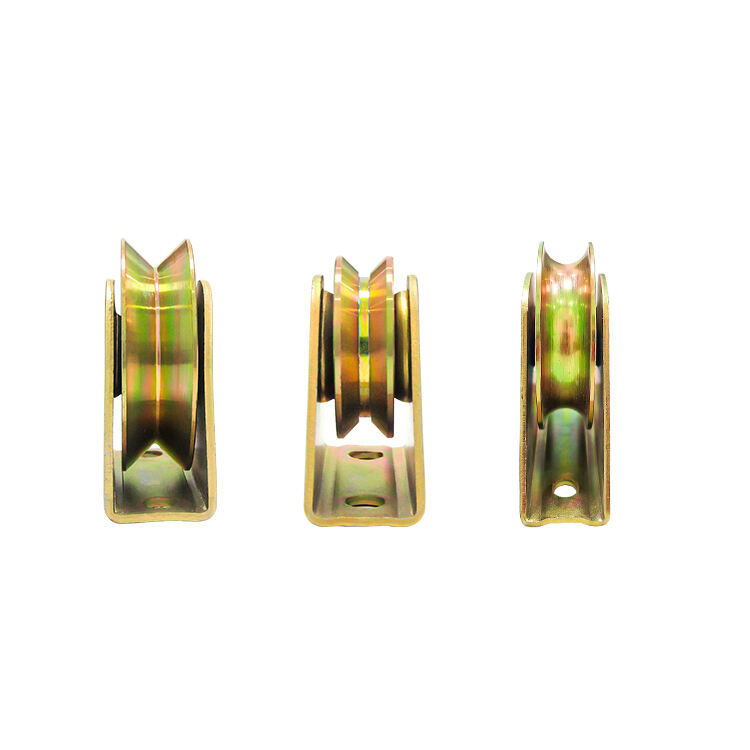
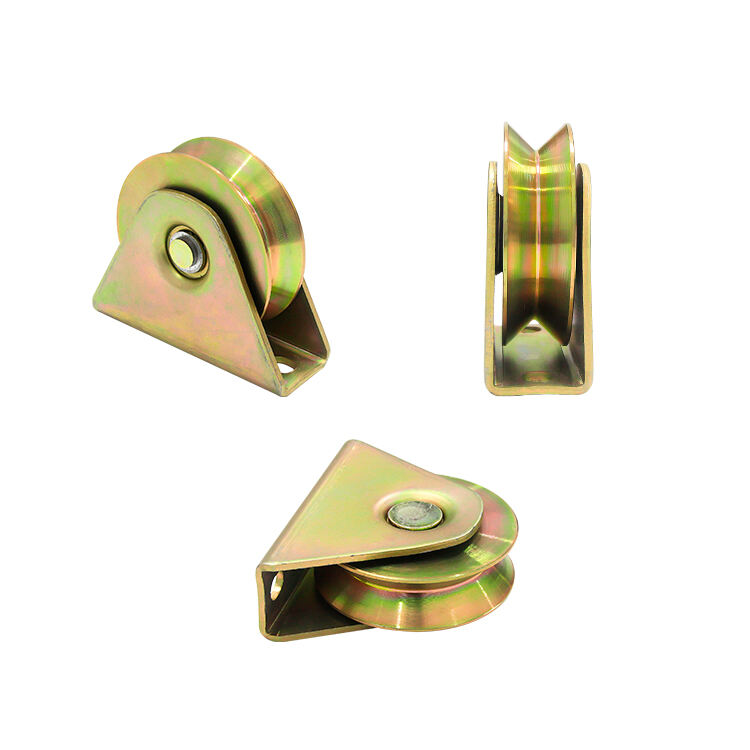
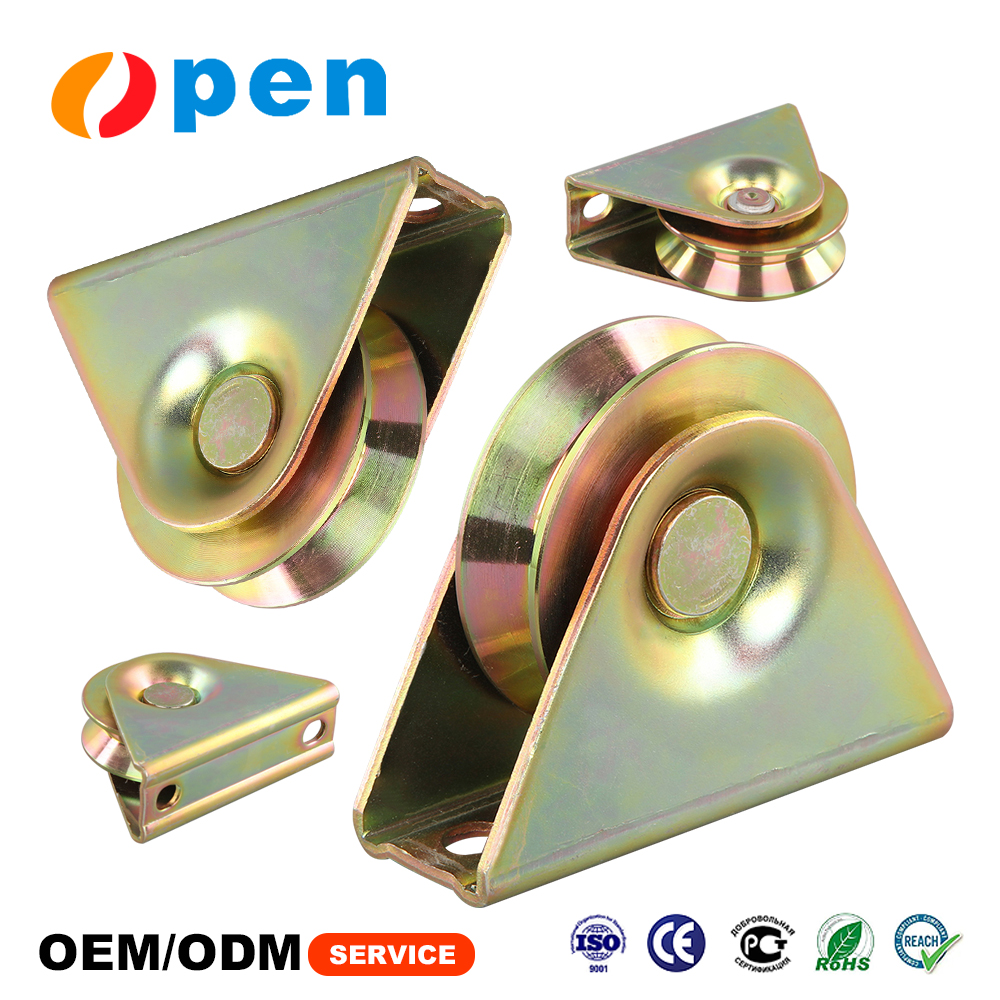
V-Groove sliding gate wheels for precision guidance on automated commercial V-track systems
V groove wheels work really well on those matching V profile tracks because they stay stable in one direction. That's why most commercial automatic gates go with these types of wheels when they need something that can handle lots of cycles day after day. The way these wheels fit together stops them from drifting sideways or coming off track completely, which means they can last through over fifty operations each day even in places where security matters or temperature control is important. The angle of contact points spreads out weight better than other designs, so there's about thirty percent less friction compared to regular flat wheels or those with rounded throats. When loaded down fully, alignment stays pretty good too, within around two millimeters. Plus, the tapered shape helps clear away dirt and stuff automatically, cutting down on how often someone needs to clean them outside. For applications where things have to run exactly right every time without fail, V groove wheels just make sense based on what we've seen in actual installations across different industries.
Mounting Configuration Essentials: Spacing, Quantity, Ground Clearance, and Camber Adaptation
Optimizing wheel spacing and count for wide or heavy sliding gates
Getting the wheel layout right matters a lot if we want to avoid track damage and early wear issues, particularly important for those big gates that are wider than 6 meters or tip the scales at over 1,000 kg. Wheels should generally be spaced between 0.8 and 1.2 meters apart so the weight gets distributed evenly across them. To figure out how many wheels are needed, take the total gate weight including any dynamic loads and safety considerations, divide it by what each individual wheel can handle (its Safe Working Load), and throw in an extra 20% just to be safe. Most large industrial gates end up needing around 4 to 6 wheels total, with wheels placed closer together at the ends where there's more stress on the system. Don't go overboard with too many wheels though because that creates unnecessary friction problems, makes alignment trickier, and means more frequent maintenance work. Make sure there's enough ground clearance for whatever terrain conditions exist at the installation site. When putting these systems on slopes, adjusting the camber angle becomes critical to stop things from getting stuck or bound up. Research shows that uneven wheel spacing can really speed up rail wear, sometimes making it worse by as much as 40%.
FAQ
What is the best wheel size for residential sliding gates?
For residential sliding gates, wheels with diameters around 40 to 50 mm made from nylon or polyurethane are recommended, as they support manual operations and standard automation while keeping operation quiet and smooth.
Why are V-Groove wheels preferred for commercial gates?
V-Groove wheels are preferred for commercial gates because they provide precision guidance, reduce sideways drift, and improve alignment, making them ideal for sites requiring frequent cycle operations.
How do you calculate Safe Working Load (SWL) for sliding gate wheels?
SWL is calculated from the gate material's density and dimensions, including auxiliary weights like motors, multiplied by dynamic factors like wind and motion. It's then divided by number of wheels and scaled using a safety margin.
Table of Contents
- Matching Sliding Gate Wheel Size to Gate Type: Residential, Commercial, and Industrial
- Calculating Load Requirements: Gate Weight, Safe Working Load (SWL), and Real-World Safety Margins
- Wheel Profile & Diameter Selection: V-Groove, U-Groove, and Round-Throat Compatibility Guide
- Mounting Configuration Essentials: Spacing, Quantity, Ground Clearance, and Camber Adaptation
- FAQ