EN
EN

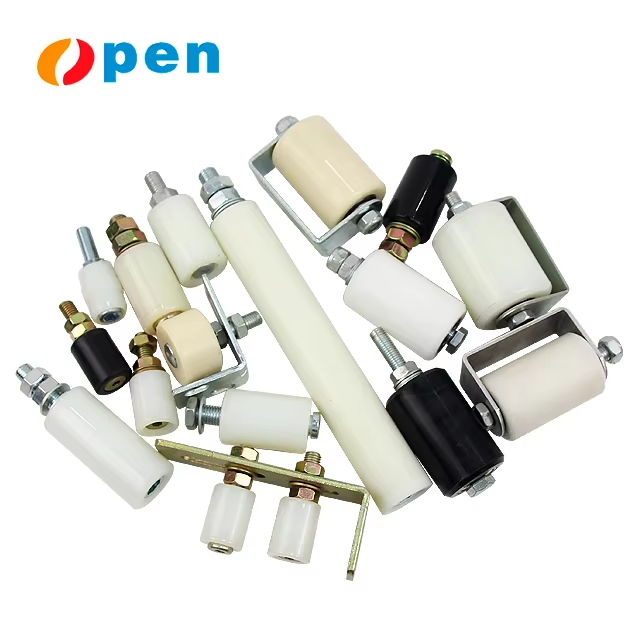
Understanding Nylon Roller Behavior Under High-Frequency Operation
Phenomenon: Challenges of High-Frequency Operation on Roller Materials
When materials undergo high frequency cycling, they tend to degrade much faster because of several issues. First there's the heat generated by constant friction, which can reach around 160 degrees Fahrenheit during continuous operation. Then we get repeated compressive forces that basically encourage cracks to form and spread throughout the material. And let's not forget about wear rates either these often go above 0.5 cubic millimeters per Newton meter in regular nylon materials that haven't been modified. All these problems working together cut down on how long something will last before needing replacement. Tests done recently in polymer fatigue research showed service life drops anywhere between 40 to 60 percent when compared with normal operating conditions.
Principle: How Nylon's Molecular Structure Affects Durability in Repetitive Motion
Hydrogen bonds within polyamide chains form these semi-crystalline areas which actually stand up to deformation better compared to those amorphous polymers we often see. Take Nylon 66 for instance it has about 55 percent crystallinity and tests show this gives it around 23 percent greater yield strength when put through similar dynamic loads as regular Nylon 6. The DMA testing confirms this difference pretty clearly. What does this mean practically? Well, rollers made from such materials distribute stress much better across their surface area especially important when they spin at high speeds continuously throughout production processes.
Case Study: Failure Analysis of Standard Rollers in Automated Conveyor Systems
A packaging plant using generic nylon rollers experienced 23 unplanned downtime events over 12 months. Post-failure analysis identified three primary failure modes:
| Failure Mode | Frequency (%) | Root Cause |
|---|---|---|
| Surface pitting | 42 | Insufficient lubricity |
| Radial cracking | 35 | Thermal degradation |
| Bearing seat wear | 23 | Moisture absorption |
Upgrading to glass-filled PA66 increased MTBF (Mean Time Between Failures) from 1,200 to 8,500 cycles and reduced annual maintenance costs by $18,000.
Trend: Increasing Demand for Wear-Resistant Nylon Rollers in Automation
The global market for specialty nylon rollers grew 19% year-over-year between 2021 and 2023, driven by automation expansion in e-commerce fulfillment centers requiring over 100,000 daily cycles. Tier 1 automotive manufacturers now specify 35% glass-reinforced PA66 rollers for all new assembly line installations.
Strategy: Matching Nylon Grade to Operational Frequency and Load Cycles
For applications exceeding 5 Hz:
- <10 kN loads: PA12 with 15% PTFE additives
- 10–25 kN: Nylon 66 with 30% glass fiber
- >25 kN: Hybrid PA46/PTFE composites
This tiered approach reduces total ownership costs by 27% compared to uniform material selection across varying load profiles.
Comparative Analysis of Nylon Grades for High-Frequency Applications
Nylon 6 vs. Nylon 66: Mechanical Strength and Wear Resistance Comparison
When looking at how nylon materials behave under high frequency stress, there's a clear difference between Nylon 6 (PA6) and Nylon 66 (PA66). The latter has about 18 percent greater tensile strength compared to PA6, plus it melts at around 265 degrees Celsius instead of the 220 degrees Celsius seen in PA6. This makes sense why we see roughly 32% less surface deformation when these materials are subjected to 50 MPa cyclic loads over 1,000 hours of continuous operation. On the flip side though, PA6 actually handles moisture better than PA66 does. Unfilled PA6 only absorbs about 1.5% moisture content while PA66 soaks up nearly double that amount at 2.4%. So if someone needs material performance stability in places where humidity levels tend to swing back and forth throughout the day, then PA6 would generally be the smarter choice despite its lower heat resistance.
Nylon 46 vs. Nylon 66 for High-Performance Applications Involving Heat and Stress
When working temperatures exceed 120 degrees Celsius, Nylon 46 shows about 22 percent better heat deflection than standard PA66 materials. Recent testing from the automotive sector back in 2023 revealed something interesting too. Components made from PA46 kept their shape and size after going through half a million cycles at 140 degrees, which is pretty impressive when compared to PA66 that failed around 19% sooner under similar stress conditions. The catch? PA46 does come with roughly 40% higher material costs upfront. But for industries dealing with constant high temps where unexpected equipment failures can halt production lines, this extra investment often pays off handsomely in reduced maintenance headaches down the road.
PA12 and Its Advantages in Low Rolling Resistance and Impact Absorption
PA12 has about 15 percent less friction than PA6 which means moving parts can operate more efficiently without wasting as much energy. The material's unique molecular makeup gives it much better shock absorption capabilities too. At freezing temperatures, this gets even more impressive with impact resistance improving by roughly 40%. That makes PA12 particularly well suited for applications in cold storage environments where materials often get stressed during transport. Looking at standard test results from ASTM D256 shows just how durable this stuff really is. After going through 10 thousand compression cycles, PA12 keeps about 95% of its original impact strength measured via the notched Izod test. Meanwhile regular PA66 without reinforcement only holds onto around 78% of what it started with under similar conditions.
Glass Fiber Reinforced Nylon: Enhancing Load-Bearing Capacity and Dimensional Stability
Incorporating 30% glass fiber into PA6 increases load capacity by 300% and cuts moisture-induced dimensional variation by 67%. High-speed trials show:
| Metric | Unfilled PA6 | 30% GF-PA6 |
|---|---|---|
| Deflection at 100N load | 1.8mm | 0.6mm |
| Wear depth after 1M cycles | 0.35mm | 0.12mm |
This reinforcement extends service intervals by 400% in heavy-load settings, despite a 55% increase in initial cost.
Cost vs. Performance: Are Higher-Cost Nylon Grades Justified Long-Term?
Premium nylon grades like PA46 or glass-filled composites carry 35–60% higher upfront costs but reduce total ownership expenses by 18–42% over five years. Lifecycle analyses indicate these materials require 63% fewer replacements in continuous operations, yielding approximately $18,000 in annual savings per production line.
Wear Resistance, Friction, and Longevity in Repeated Cycling
Key Factors Influencing Wear Rate in High-Frequency Use
How long rollers last during repeated movements really comes down to three main things: how often they're used, the hardness of their surfaces, and whether everything is properly aligned. When systems run at high frequencies but aren't perfectly aligned, forces get distributed unevenly across components which speeds up wear and tear significantly. Take nylon materials for instance. Nylon 66 holds up much better against deformation compared to regular Nylon 6 when dealing with loads over 5,000 cycles per hour. Why? Because it has about 23% more tensile strength according to ASTM D638 standards. Then there's surface hardness measured on the Rockwell R scale. The connection between this hardness rating and how resistant something is to abrasion isn't just theoretical either. Industrial testing shows that rollers with an R120 rating typically outlast their R100 counterparts by around 40%. Makes sense why manufacturers pay close attention to these numbers.
Testing Data: Abrasion Resistance Metrics Across Nylon Variants (ASTM G65)
Standardized ASTM G65 testing highlights performance differences:
| Nylon Grade | Abrasion Loss (mm³) | Load Capacity (kg/cm²) | Optimal Frequency Range |
|---|---|---|---|
| Nylon 6 | 32 | 85 | ≤ 2,000 cycles/hour |
| Nylon 66 | 18 | 120 | ≤ 7,000 cycles/hour |
| Glass-Filled | 9 | 200 | ≤ 12,000 cycles/hour |
Glass-reinforced variants exhibit 67% lower wear than unreinforced PA66, confirming their suitability for high-speed packaging lines.
Self-Lubricating Properties of Nylon Reducing Friction Over Time
The way nylon absorbs moisture from the air (about 2.5 to 3% of its weight) actually creates a tiny lubricating film when it's running. This helps cut down on friction quite a bit - tests show around 18 to 22% less friction after about 500 operating cycles. What this means is that roller components can keep their friction levels under 0.15 microns without needing any outside oil or grease. That's really important for applications where contamination is a concern, like in food processing areas or cleanrooms where purity standards are strict. When manufacturers mix in between 5 and 15% PTFE material into the nylon base, they get even better results. Components last through well over 30 thousand cycles with minimal wear, typically less than half a millimeter of surface loss in automated assembly lines.
Load Capacity, Dimensional Stability, and Environmental Resistance
How Moisture Absorption Impacts Nylon’s Dimensional Stability in Humid Environments
When nylon absorbs moisture it expands quite a bit actually around 2.5 to 3.8 percent of its weight when exposed to 85% humidity levels. This causes roughly 1.2% volume increase which messes with the uniformity of diameters and throws off how loads are distributed across components. For environments where humidity varies constantly or stays high like in food processing plants or operations located in tropical regions manufacturers need to go for special low absorption variants such as PA12 or those reinforced with glass fibers. These materials help keep dimensional stability within tight limits about plus or minus 0.05 mm even after tens of thousands of operational cycles.
Mechanical Strength Retention After 10,000+ Cycles: Industrial Trial Data
Lab tests indicate that PA66-GF30 keeps around 85% of its initial yield strength even after going through 10,000 cycles at 15 Hz frequency. On the flip side, plain old nylon 6 starts losing ground fast, dropping about 15% in compressive strength within only 5,000 cycles because molecules start getting tired from all that stress. When manufacturers add glass fibers between 20% and 30%, they see roughly 40% less plastic deformation according to those ASTM D638 tension tests everyone relies on. This really drives home why reinforcement matters so much in places where materials get worked over constantly, think bottling plants or packaging operations where parts need to hold up day after day without failing.
Rolling Resistance and Energy Efficiency in Continuous Operation
Nylon has a friction coefficient ranging from about 0.15 to 0.25 when it comes into contact with steel surfaces, which helps cut down on energy usage in systems that run continuously. When looking at PA12 rollers specifically, they can actually bring down the load on conveyor motors by somewhere around 12 to 18 percent compared to those made from acetal materials during full day operations. What makes these self lubricating versions particularly valuable is their ability to keep rolling resistance under 0.18 levels even after going through temperature changes from minus ten degrees Celsius all the way up to plus eighty degrees Celsius. This matters a lot for places where power conservation is critical like pharmaceutical cleanrooms or inside automotive manufacturing facilities where every watt counts. For most applications though, finding the right material starts with picking something with a Shore D hardness rating somewhere between seventy five and eighty five. This range tends to work best because it strikes a good compromise between how well the material resists deformation and still maintains decent energy efficiency characteristics.
Selection Criteria and Real-World Applications of High-Frequency Nylon Rollers
Evaluating Load Requirements vs. Dynamic Ratings of Solid Nylon Rollers
Matching roller specifications to operational demands is critical. Operating rollers at 120% of their rated dynamic load increases wear rates by 40%. For high-frequency use, select nylon grades with:
- 20–30% higher tensile strength than peak expected loads
- Fatigue resistance verified via ISO 15242-2 cycle testing
Conveyor system analyses show that upsizing rollers by one grade reduces replacement frequency by 62% in automotive assembly lines.
Environmental Resistance: Temperature, Chemicals, and UV Exposure
Nylon’s inherent stability makes it highly resistant to corrosion—outperforming steel by a 3:1 ratio in harsh environments. Key thresholds include:
| Factor | Performance Threshold |
|---|---|
| Continuous Temp Range | -40°C to 120°C |
| Chemical Exposure | Resists pH 3–11 solutions |
| UV Stability | 5,000+ hours without brittleness |
Its adoption in pharmaceutical cleanrooms reflects its ability to withstand daily sterilization while maintaining tight dimensional control.
Mounting Configurations and Alignment Tolerance in High-Speed Setups
Proper mounting reduces edge loading by 78% in systems exceeding 120 cycles/minute. In automated warehouse sorters, tapered rollers with ±1.5° self-aligning capability extend bearing life by 200%. High-speed packaging lines using preloaded angular contact mounts achieve 30% energy savings by minimizing vibration losses.
Frequently Asked Questions
What causes nylon rollers to degrade faster in high-frequency applications?
Nylon rollers degrade faster under high-frequency operation due to heat generated by friction, repeated compressive forces encouraging crack formation, and increased wear rates.
Why is Nylon 66 preferred over Nylon 6 for high-stress applications?
Nylon 66 is preferred for high-stress applications because it offers approximately 18% greater tensile strength and better heat resistance compared to Nylon 6.
How does moisture absorption affect the dimensional stability of nylon in humid environments?
Moisture absorption causes nylon to expand, altering dimensional stability. Special low absorption variants like PA12 are used to minimize these effects.
What are the benefits of using glass fiber reinforced nylon?
Glass fiber reinforced nylon increases load capacity, enhances dimensional stability, and extends service intervals in heavy-load settings.
How is rolling resistance minimized in continuous operation?
Rolling resistance is minimized through self-lubricating properties of nylon, reducing friction, and selecting materials with Shore D hardness ratings between 75 and 85.
Table of Contents
-
Understanding Nylon Roller Behavior Under High-Frequency Operation
- Phenomenon: Challenges of High-Frequency Operation on Roller Materials
- Principle: How Nylon's Molecular Structure Affects Durability in Repetitive Motion
- Case Study: Failure Analysis of Standard Rollers in Automated Conveyor Systems
- Trend: Increasing Demand for Wear-Resistant Nylon Rollers in Automation
- Strategy: Matching Nylon Grade to Operational Frequency and Load Cycles
-
Comparative Analysis of Nylon Grades for High-Frequency Applications
- Nylon 6 vs. Nylon 66: Mechanical Strength and Wear Resistance Comparison
- Nylon 46 vs. Nylon 66 for High-Performance Applications Involving Heat and Stress
- PA12 and Its Advantages in Low Rolling Resistance and Impact Absorption
- Glass Fiber Reinforced Nylon: Enhancing Load-Bearing Capacity and Dimensional Stability
- Cost vs. Performance: Are Higher-Cost Nylon Grades Justified Long-Term?
- Wear Resistance, Friction, and Longevity in Repeated Cycling
- Load Capacity, Dimensional Stability, and Environmental Resistance
- Selection Criteria and Real-World Applications of High-Frequency Nylon Rollers
-
Frequently Asked Questions
- What causes nylon rollers to degrade faster in high-frequency applications?
- Why is Nylon 66 preferred over Nylon 6 for high-stress applications?
- How does moisture absorption affect the dimensional stability of nylon in humid environments?
- What are the benefits of using glass fiber reinforced nylon?
- How is rolling resistance minimized in continuous operation?